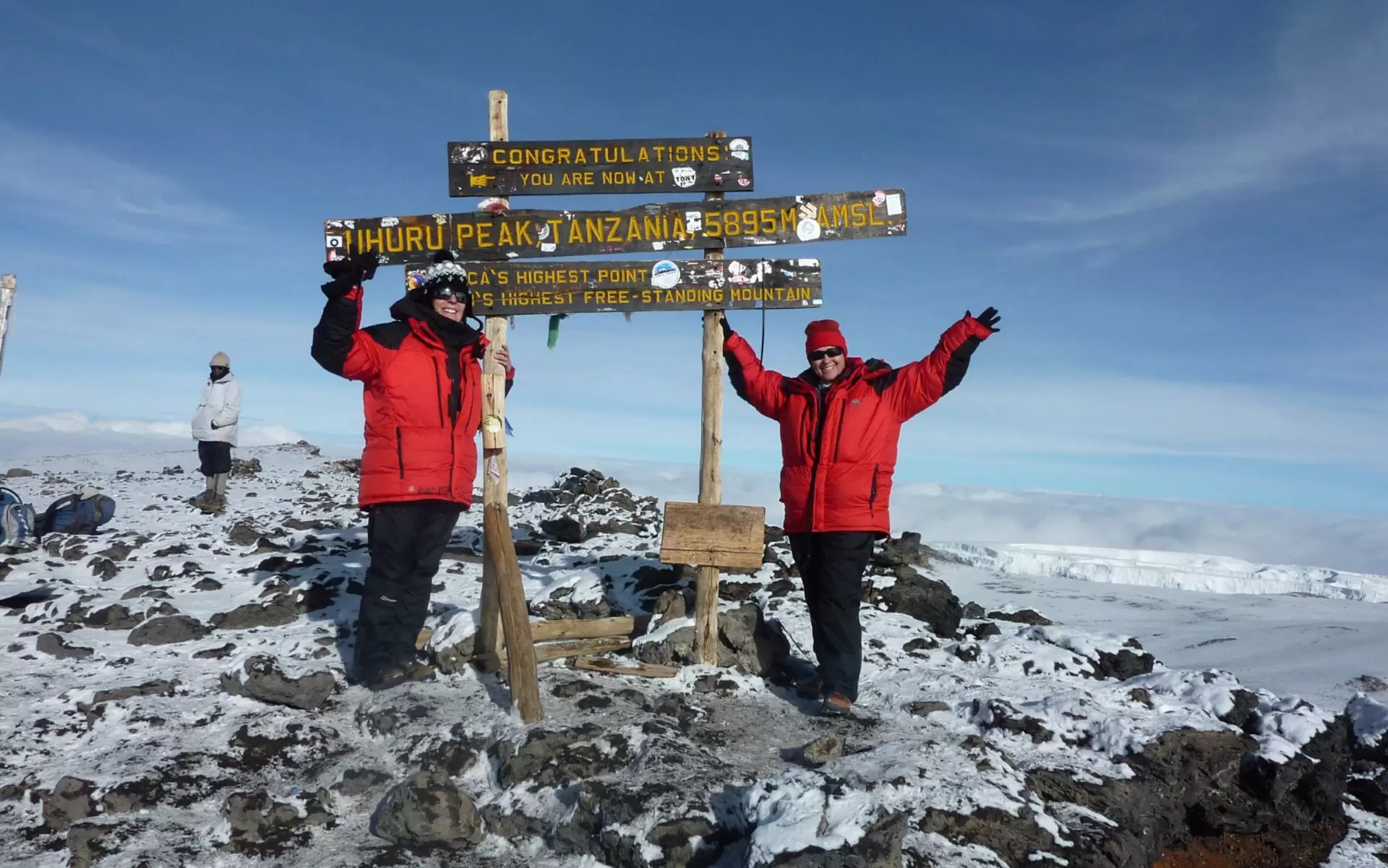
Mount Kilimanjaro, one of the legendary Seven Summits, rises to 19,341 feet (5,895 meters), making it the tallest peak in Africa. While reaching the summit does not require technical climbing skills, the trek should never be underestimated. Hiking at extreme altitude in a remote environment carries real risks. Every year, more than 1,000 people are evacuated from Kilimanjaro, and sadly, some do not make it home.
Your safety is our top priority. To ensure a secure climb, we focus on several critical factors that affect a trekker’s well-being. These include the risk of altitude sickness and other altitude-related complications, the challenges posed by the mountain’s remote location, the training and experience of your guides, the availability of proper emergency equipment, and robust monitoring and evacuation protocols.
With careful preparation, expert guidance, and comprehensive safety measures in place, climbing Kilimanjaro can be both a safe and deeply rewarding adventure. At Eastland Adventures, safety is at the heart of every climb we organize. Here’s how we work to protect you on your journey to the Roof of Africa.
How We Keep You Safe on Kilimanjaro
Medical Screening and Preparation
Safety begins long before you set foot on the mountain. Every climber completes a detailed medical questionnaire so our team can be aware of any pre-existing conditions. In some cases, we may request confirmation from your doctor to ensure you are fit for the climb. It’s also important to inform your guide about any medications you’re using, including over-the-counter remedies or Diamox for acclimatization. Transparency helps us prepare for your individual needs and safeguard your well-being.
Professional Guide Training
Your guide is your lifeline on the mountain. All of our guides undergo Wilderness First Responder (WFR) training, equipping them with the knowledge to detect early signs of altitude sickness and respond appropriately. Through our partnership with the Sentinel Outdoor Institute, our team receives continuous high-altitude medical training in Tanzania. This ensures that every guide remains up to date with the latest safety practices and emergency protocols. Carrying equipment is not enough—our guides know exactly how to use it.
Daily Health Monitoring
Every day on the mountain, our guides perform comprehensive health checks. These include monitoring heart rate, blood pressure, and oxygen saturation levels. We also encourage climbers to report any symptoms—such as headaches, nausea, or fatigue—so issues can be addressed early. Close monitoring allows us to make informed decisions about whether a climber is fit to continue or needs to descend for safety.
Emergency Oxygen and Medical Supplies
We carry a complete medical kit on every climb, including bottled oxygen and a portable stretcher. Oxygen is reserved strictly for emergencies, as the most effective treatment for severe altitude sickness is rapid descent. If a climber is unable to walk, a stretcher provided by the National Park is used to transport them to a safer altitude. Our medical kits also contain supplies for treating minor injuries and illnesses, ensuring that our team can respond immediately to a wide range of situations.
Helicopter Evacuation Services
In the rare event of a severe emergency, we have access to professional search and rescue helicopter services operating from Moshi. Once a distress call is made, a helicopter can be dispatched to the nearest safe landing zone, where the patient is airlifted to a local hospital. However, if weather conditions prevent a helicopter from landing, a manual stretcher evacuation will be carried out by our trained team and National Park staff.
Your Safety, Our Commitment
Climbing Kilimanjaro is a life-changing adventure, but it should always be approached with respect for the mountain and a strong focus on safety. At Eastland Adventures, your well-being is our top priority. With trained guides, strict health monitoring, proper equipment, and reliable evacuation systems, we ensure that your journey to Africa’s highest peak is as safe as it is unforgettable.